Scale and proportion: how do I pick the right furniture size?
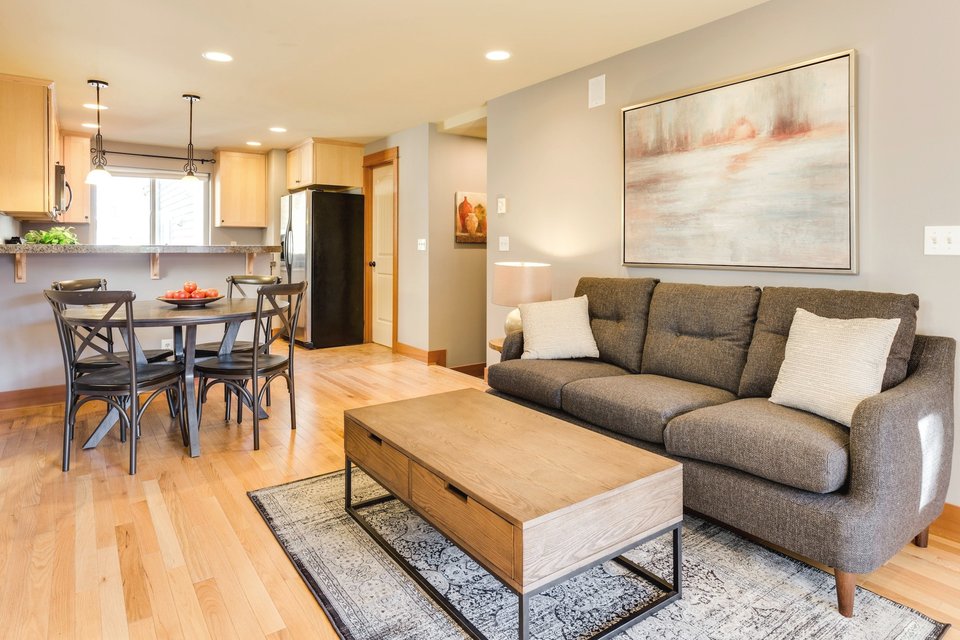
Scale is how furniture fits the room. Proportion is how pieces fit each other. A good rule of thumb: fill about 60% of the floor with furniture and keep about 40% free, then size each piece against its neighbours.
Scale: furniture and the room
- Measure the room first, including ceiling height, windows and doors.
- Big room, bigger pieces: small furniture in a large room looks scattered.
- Small room, fewer pieces at the right size: not many tiny ones.
- Low ceilings: low, long furniture. High ceilings: tall bookcases, long curtains and pendant lights fill the height.
- Draw pieces on the floor with tape to see their real footprint.
Proportion: pieces together
Common guides:
- Coffee table: about two-thirds the length of the sofa, and about the height of the seat or slightly lower.
- Side tables: close to the height of the sofa arm.
- Rug: large enough for at least the front legs of all seats.
- Art above a sofa: about two-thirds of the sofa's width.
- Dining table: about 60 cm of edge per person, plus room for chairs to move.
- Bed: at least 60 cm free on the sides you use.
- Pendant over a table: about half to two-thirds of the table's width.
Visual weight
Two pieces of the same size can feel different. A sofa with thin legs and arms looks lighter than a solid block. Glass, open frames and raised legs feel lighter; dark colours and solid bases feel heavier. Use light pieces in small rooms, and balance one heavy piece with lighter ones around it.
Signs something is off
- You can't walk around a piece comfortably.
- One piece dominates and the rest look like toys.
- The room feels empty even with furniture in it.
- A rug or lamp looks lost.
Check sizes before you buy
Furniture looks smaller in a showroom. A 3D model of your room with real dimensions shows exactly how big each piece will be in your space.
Let's talk about your project.
Send your plans for a quote, or book a free 15-minute call.